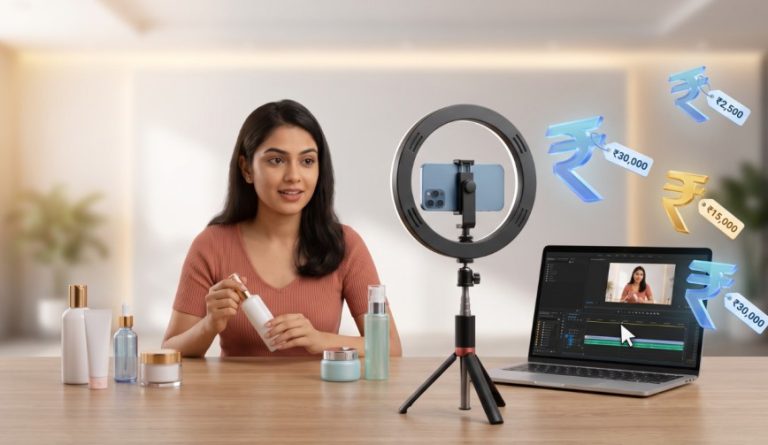
Budgeting Facebook Ad Video Production for Performance Marketing Campaigns
Facebook advertising today is less about shouting the loudest and more about explaining the fastest. People scroll with purpose, impatience, and very little mercy. In this environment, video becomes the bridge between attention and action.
For performance marketing campaigns, video production budgeting is not a creative indulgence. It is a business decision. Spend too little and your ad looks forgettable. Spend too much, and the pressure to perform becomes unrealistic.
The goal is balance. Let us understand how to achieve it.
Understanding Performance Marketing Before Budgeting

( Source – freepik.com )
Before discussing budgets, it is important to understand what performance marketing actually demands from a video. Performance marketing is not about impressions or awards. It is about results that can be measured clearly.
A performance video is designed to guide the viewer toward a specific action in a short time. Every second must earn its place.
Key expectations from performance videos:
Immediate attention in the first few seconds
Clear communication of value
A visible next step for the viewer
Once you understand this, budgeting becomes less emotional and more logical. You stop paying for beauty and start paying for effectiveness.
Check Out
Boss Wallah Studios empowers entrepreneurs and brands to produce high-quality content with ease.
Why Facebook Ad Videos Fail Despite Healthy Budgets
Many brands assume that a higher budget automatically means better performance. In reality, money only amplifies good thinking. It cannot fix a poor strategy.
Most failed videos suffer from confusion rather than a lack of money. They try to do too much in too little time.
Common reasons for failure include:
Slow or boring openings
Too much focus on brand history
Complicated messaging
No clear call to action
When a video does not respect the viewer’s time, even a large budget cannot save it. Performance ads succeed when they speak clearly and quickly.
How Budgeting Changes Across the Marketing Funnel
Not every viewer is at the same stage of decision-making. This is why your video budget should change based on where the audience sits in the funnel.
A funnel simply means the journey from discovering a brand to finally buying from it.
Top of Funnel Videos
At this stage, people do not know your brand or may not care yet. The job of the video is to introduce a problem or spark curiosity.
Typical characteristics:
Short duration
Simple messaging
Relatively low production cost
Common formats:
UGC style videos
Talking head clips
Problem-focused hooks
At this stage, spending too much is unnecessary. The goal is reach and relevance, not persuasion.
Middle of Funnel Videos
Here, the audience is aware of your brand but still undecided. They need clarity, reassurance, and proof.
Typical characteristics:
Slightly longer duration
Clear explanation of benefits
Moderate production effort
Common formats:
Explainer videos
Testimonials
Product walkthroughs
Budgets here should allow better scripting and editing because clarity becomes more important than novelty.
Bottom of Funnel Videos
This is where conversions happen. Viewers are close to making a decision and need a final push.
Typical characteristics:
Strong offers
Clear calls to action
Higher trust signals
Common formats:
Customer success stories
Comparison videos
Offer-driven creatives
Spending slightly more here makes sense because small improvements can directly impact revenue.
ALSO READ | Why Facebook Ad Video Production Pricing Varies So Much Across Agencies.
Where Your Video Production Budget Actually Goes
Many marketers think video budgets are only about cameras and shoots. In reality, most of the impact comes from planning and execution.
Script and Concept Development
This stage decides what the video says and how it starts. It shapes the hook, the flow, and the ending.
Good scripts focus on:
A relatable problem
A simple solution
A clear benefit
A direct action
Investing here reduces wastage later. A weak script costs more in performance than a weak camera.
Shooting and Content Creation
Shooting does not always mean big sets and lights. Performance marketing prefers speed and authenticity.
Common shooting options:
Smartphone videos
Office or home setups
Creator recorded clips
Studio shoots when required
Simple shoots are faster, cheaper, and easier to repeat, which is ideal for testing.
Editing and Post Production
Editing shapes how long people stay with your video. It controls pacing, clarity, and attention.
Important editing elements include:
Tight cuts
Subtitles for silent viewing
Clear visual hierarchy
Brand consistency
Good editing improves performance even when the raw footage is simple.
Why Multiple Videos Beat One Expensive Video
Performance marketing works on data, not guesses. You rarely know which video will win until you test.
Instead of spending everything on one video, spreading the budget across variations increases your chances of success.
Testing usually includes:
Different hooks
Different formats
Different lengths
Different calls to action
This approach lowers risk and improves learning speed. One failed video hurts less when you have backups.
Practical Budget Allocation Example
Budgeting works best when aligned with media spend.
If your monthly Facebook ad spend is ₹1,00,000, allocating a portion to creative keeps campaigns fresh.
A healthy split looks like:
15 to 25 per cent on video production
Remaining on ad spend
This allows creative refreshes without stopping campaigns due to outdated ads.
Hidden Costs That Affect Long-Term Budgeting
Some costs do not appear in initial estimates but show up later.
Often overlooked costs include:
Re-editing videos for new offers
Updating prices or messaging
Creating regional language versions
Adjusting formats for placements
Planning for these avoids sudden overspending later.
ALSO READ | Pinterest Side Hustle Ideas You Can Start with Zero Investment.
How to Measure Whether Your Video Budget Is Working

( Source – freepik.com )
Video success should be judged by performance, not aesthetics.
Key metrics to track:
Thumb stop rate, which shows if people stop scrolling
Watch time
Cost per click
Cost per conversion
When these numbers improve, your video budget is justified, even if the video looks simple.
When Increasing Your Video Budget Makes Sense
Spending more is logical only when backed by data.
Increase budgets when:
A video is consistently performing well
Scaling is limited by creative quality
Audience size is large
The campaign has high business importance
Spending without proof often leads to disappointment.
Check Out
BossWallah enables you to create, optimise, and grow social media video channels effortlessly from scratch.
Final Thoughts
Budgeting Facebook ad video production for performance marketing is not about choosing cheap or premium. It is about choosing what helps the campaign perform better.
Good videos respect the audience’s time, speak clearly, and lead to action. When your budget supports these goals, performance follows naturally.
In the end, the best video is not the most expensive one. It is the one that quietly delivers results while you focus on scaling.